
Decoding High Performance | Part 4

Decoding High Performance | Part 4

Decoding High Performance | Part 4

Man wearing white bunny hat with fake glasses and mustache design.

Sam Clark

Sam Clark

Organisational Specialist

Organisational Specialist

Organisational Specialist

Direction creates the shared mindset that drives high performance. This mindset helps people act on what matters, even when no one’s there to tell them.

Organisations today are pulled in multiple directions. Without a clear sense of direction, different parts of the organisation can make sensible decisions locally that don’t add up overall.

Previous/Next Articles

The case for direction

Modern organisations are not simple anymore. Work is interdependent, teams are spread out and decisions are constant. The old model where people stayed close to a manager and picked up what mattered along the way, doesn’t really hold. 

This is where direction starts to matter. It gives people something to orient to when no one is there to tell them what matters most. 

Why it matters

Direction (think vision, purpose, strategy, goals) creates a shared mindset that drives high performance. It creates alignment, and alignment makes coordination work, helping people to act on what matters, even when no one’s there to tell them.

This becomes performance critical in complex, high pressure and interdependent systems.

Organisations today are pulled in multiple directions. Without a clear sense of direction, different parts of the organisation can make sensible decisions locally that don’t add up overall.

Direction, through alignment, reduces that tension. It connects what the organisation is trying to achieve with what people do, day to day. It gives teams a shared understanding of how their work fits together, and it anchors decisions so resources and effort move in the same direction.

But setting direction isn’t enough. It has to show up in the flow of work and in the choices people make, especially when things are unclear or under pressure.

Because performance in modern organisations depends less on individual brilliance and more on how well the system moves together. Coordination is no longer just about control. It’s about people being able to respond in real time. Direction gives people a common way to interpret situations, make trade-offs and act without waiting to be told. 

Real life

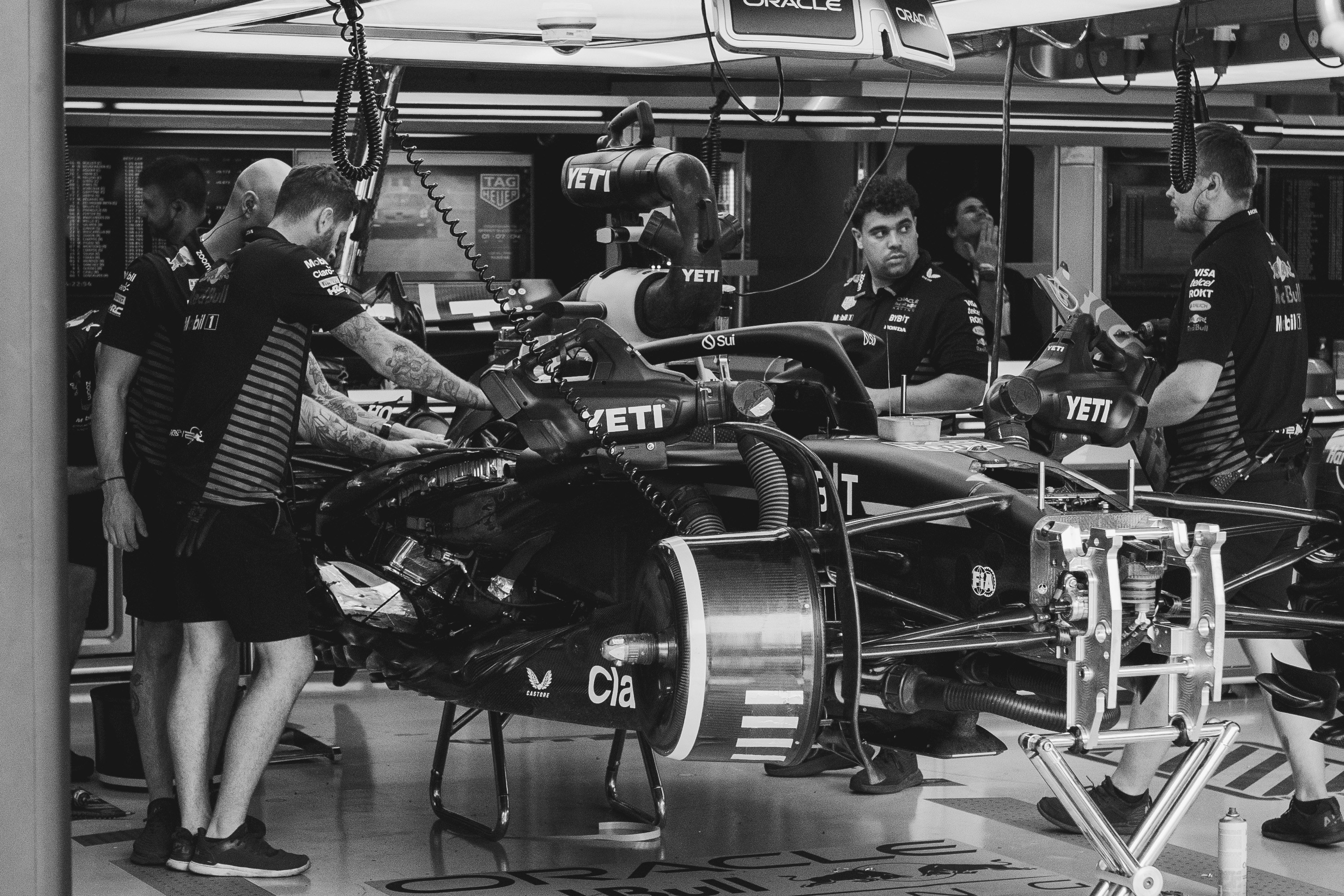
We see this most clearly in high-performance environments where coordination and direction are non-negotiables, like Formula 1.

Formula 1 is fast, interdependent and unforgiving. Performance depends on design, engineering, race strategy and commercial operations all working in sync. When something is off, it shows up quickly.

That’s what makes teams like Mercedes such a great case study.

Not only did they deliver eight consecutive championship wins. They continually sustained performance across multiple dimensions, from commercial strength, brand value and talent attraction.

That kind of consistency is difficult to achieve through isolated excellence alone. In a system this tightly connected, success depends on how well everything moves together. It points to shared understanding, aligned choices and coordinated execution at scale.

When direction is works, it tends to leave a recognisable trace. You see it in how decisions line up over time, how effort translates into outcomes and whether performance holds under pressure. 

Test direction in your organisation

If you want to test how direction is showing up in your organisation, look for these three signals:

  1. Coherence: The patterns in your actions
    Ask: Do we have purpose driven performance? Are our actions consistently aligned with our why?

  2. Traction: A clear link between intent and reality
    Ask: Is our strategy enabling performance? Are we winning in the dimensions our strategy depends on?

  3. Results: Sustained, not occsaional.
    Ask: Are our goals working as a system? Are we achieving results for the right reasons without creating hidden damage?

Ask a leader, as yourself, when pressure rises and no one is there to clarify the call, does direction shape what people choose to do, or does it only work when you're in the room?


Curious?

Stay tuned for Part 5: Decisions

Previous/Next Articles

more epiphanies

more epiphanies

User research diagram

Marianne Ross

UX Lead

Jun 16, 2026

Are you bridging the gap between the brief and the reality of work?
Interpreting the gap between what a client says, how people actually move and connect, and what the space needs to support the organisation separates the good designers from the great.
User research diagram

Marianne Ross

UX Lead

Jun 16, 2026

Are you bridging the gap between the brief and the reality of work?

Interpreting the gap between what a client says, how people actually move and connect, and what the space needs to support the organisation separates the good designers from the great.

Sam Clark

Organisational Specialist

May 28, 2026

Decoding High Performance | Part 2
High performance rarely happens in low-pressure environments. The best organisations create clarity around what matters, what's at risk, and why it counts.

Sam Clark

Organisational Specialist

May 28, 2026

Decoding High Performance | Part 2

High performance rarely happens in low-pressure environments. The best organisations create clarity around what matters, what's at risk, and why it counts.

Sam Clark

Organisational Specialist

Jun 9, 2026

Decoding High Performance | Part 3
High performance conditions don't equal high performance results. If you want to turn potential into performance, get clear on the reusults that matter most.

Sam Clark

Organisational Specialist

Jun 9, 2026

Decoding High Performance | Part 3

High performance conditions don't equal high performance results. If you want to turn potential into performance, get clear on the reusults that matter most.

Formula one engineering team

Sam Clark

Organisational Specialist

May 6, 2026

Decoding High Performance | Part 1
In this series, we’ll explore how to define and measure what’s really going on beneath the surface, how systems, behaviours and conditions interact to shape outcomes, and how different elements come together to create value.
Formula one engineering team

Sam Clark

Organisational Specialist

May 6, 2026

Decoding High Performance | Part 1

In this series, we’ll explore how to define and measure what’s really going on beneath the surface, how systems, behaviours and conditions interact to shape outcomes, and how different elements come together to create value.

User research diagram

Marianne Ross

UX Lead

May 7, 2026

What helps most when designing spaces for the people using them?
Workplace design shapes far more than how a workplace looks. It influences how people focus, collaborate, move, and get work done every day. It shapes culture, experience, and performance in very real, human ways. That’s why the decisions behind the design matter just as much as the design itself.
User research diagram

Marianne Ross

UX Lead

May 7, 2026

What helps most when designing spaces for the people using them?

Workplace design shapes far more than how a workplace looks. It influences how people focus, collaborate, move, and get work done every day. It shapes culture, experience, and performance in very real, human ways. That’s why the decisions behind the design matter just as much as the design itself.

Shape how people, systems and actions drive performance.

That Works

To help organisations see what they couldn't before.

©2026 That Works — All work, all rights.

Offline

That Works Major Hub. Level 1, 68 Northburne Av, Canberra ACT 2601

Create Studio LLC.
567 Sunset Blvd,
Suite 501

Los Angeles, CA 90026